

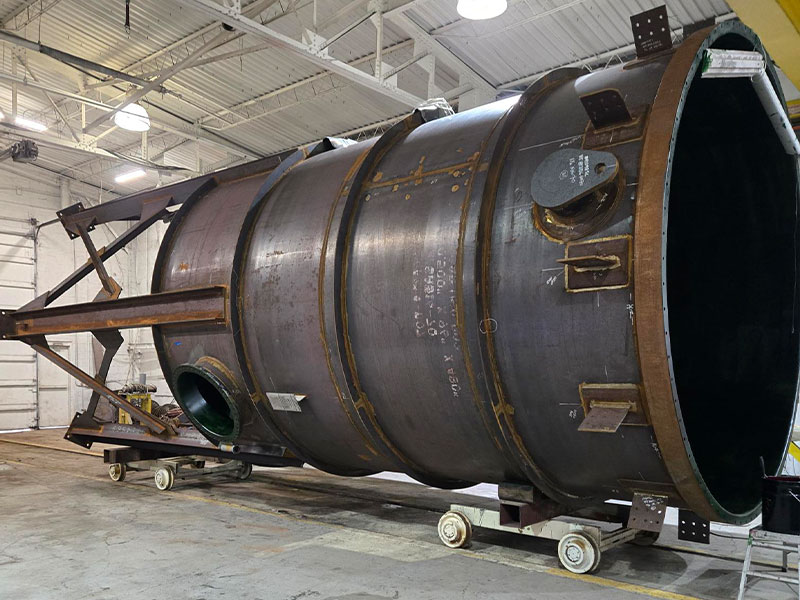
The Role of Steel Tank Fabricators in Modern Industry
Steel tank fabricators play a vital role in modern industrial operations. The range of applications requiring steel tanks is vast and varied. They are essential for industries that rely on safe, efficient, durable containment systems to store, transport, and process liquids, gases, and bulk materials. Steel tanks are widely utilized across diverse sectors, including chemical processing, oil and gas, wastewater treatment, food and beverage, agriculture, pharmaceuticals, and more.
Custom steel tanks require a significant investment of capital and play a critical role in the processes they serve. As such, it makes good sense to do everything possible to maintain these tanks in good working condition. Selecting the best lining for your tank is the best way to ensure it has a long and productive life.
Applications of Steel Tanks by Industry
The considerable spectrum of chemicals and other potentially harsh, caustic, or abrasive substances that can be present in industrial processes requires great versatility in steel tank design. The addition of a custom coating on the inside surface of a steel tank neutralizes the threat of corrosion these agents represent.
CHEMICAL PROCESSING
Steel tanks are commonly used to store chemicals safely. They are designed to withstand harsh conditions, including exposure to corrosive materials and extreme temperatures, making them indispensable in specialty chemical manufacturing, toll processing, and plating applications.
OIL AND GAS
In the oil and gas industry, steel tanks are employed for the storage of crude oil, refined petroleum products, and natural gas. Their durability and ability to handle high pressures ensure reliability in demanding environments.
WASTEWATER TREATMENT
Water treatment facilities utilize steel tanks for holding, mixing, and processing water and chemicals. The tanks can be lined with elastomeric or corrosion-resistant coatings to ensure longevity.
FOOD AND BEVERAGE
Hygienic storage of consumables, such as liquids and grains, is essential in this sector. Fabricators design tanks that comply with food-grade standards and are easy to clean.
AGRICULTURE
Farmers rely on steel tanks for storing water, fertilizers, and pesticides. Customizations include features to handle varied climatic conditions.
PHARMACEUTICAL AND BIOTECH
Precision is critical in these industries, where steel tanks are used for clean and controlled environments in drug manufacturing and biological processes.
CUSTOMIZATION FOR INDIVIDUAL APPLICATIONS
Steel tanks are rarely off-the-shelf products. Fabricators work closely with clients to ensure each tank meets specific operational requirements, addressing factors such as size, shape, material, and functionality.
MATERIAL SELECTION
Tanks are built from stainless steel, carbon steel, or specialty alloys, depending on the stored material’s chemical properties and environmental exposure.
COATINGS AND LININGS
Custom coatings, such as epoxy or elastomeric linings, enhance corrosion resistance and ensure compatibility with the stored substance.
SPECIALIZED FEATURES
Fabricators can integrate mixers, heating elements, insulation, and sensors into tanks for enhanced functionality.
Compliance and Certification
Custom steel tanks are typically designed to meet industry-specific standards, including ASME, API, and FDA regulations established to ensure safety and reliability.
Established by the American Petroleum Institute (API), API 650 ensures tanks are designed for high-capacity storage with features like floating roofs, secondary containment, and weather resistance for outdoor use.
From the American Society of Mechanical Engineers (ASME), ASME B31.3 addressed piping systems associated with tanks, establishing best practices for regulating pressure, temperature, and materials to ensure safety and operational reliability.
Selecting a Fabricator
By offering tailored solutions, steel tank fabricators provide critical infrastructure that enables modern industries to operate efficiently and safely. Their expertise ensures that tanks not only meet technical requirements but also adapt to the unique demands of each application.
Any discussion about steel tank design should also cover tank lining. The two are best considered together from the outset. In fact, using a single source for tanks and their associated linings can eliminate compatibility issues that can occur when multiple providers are involved. With nearly 70 years of success behind us and the capacity to deliver lined tanks for nearly any industrial application, Protective Coatings, Inc., can make sure you get the tank and the lining you need for optimal results over an extended service life.